
EcoWrite: Turning Paper Waste into Sustainable Pencils
By:
From: Damascus – HMK – CE
Supervised by: DR.Mahmoud AlHinnawi – Eng.Eman Alchrihi
Graduation Year: 2026
EcoWrite Project Overview
The EcoWrite project is based on transforming used and discarded paper generated by schools, universities, offices, government institutions, and other sources into environmentally friendly stationery products. The recycled-paper pencil is the first product developed within this line.
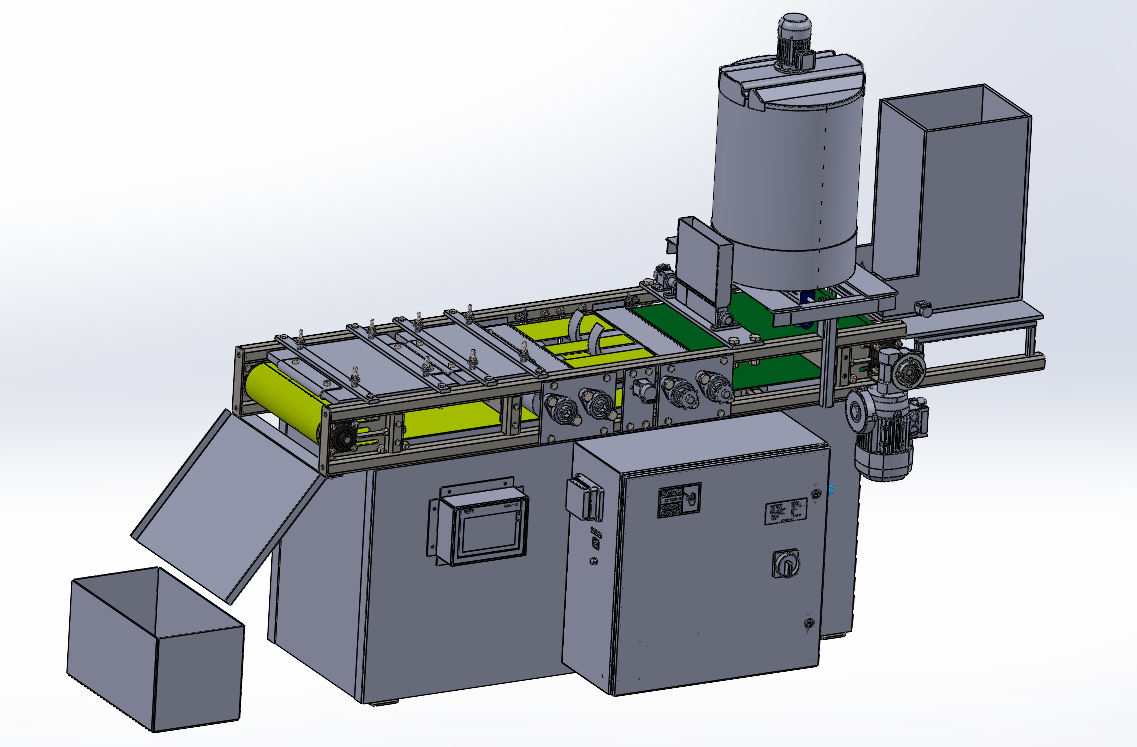
The concept involves collecting, sorting, and preparing waste paper, then using it as the primary material for forming the pencil body instead of wood or plastic. The pencil is manufactured by rolling layers of recycled paper around a graphite core using a suitable adhesive. It is then dried, cut, finished, and packaged through an integrated production line that has been designed and will be manufactured locally using national expertise. The result is a practical product suitable for everyday use.
The project is not limited to producing pencils. It aims to offer a practical model of sustainability by transforming a material commonly treated as waste into a useful, affordable educational product. Its purpose is to support education in Syria, particularly given the need for simple and sustainable educational supplies in areas affected by the war.
In the future, the product may be developed into a plantable pencil by adding seeds to its end. Once the pencil has been fully used, it can be planted, thereby promoting environmental awareness among students and users and strengthening the connection between education and environmental protection.
The Problem
The main problem is the large volume of paper wasted every day in educational and administrative institutions. A significant portion of this paper is discarded without being effectively reused. This increases the volume of solid waste, places additional pressure on collection, transportation, and waste-processing systems, and results in the loss of a recyclable raw material.
Traditional pencil manufacturing, on the other hand, generally relies on wood, which is associated with the consumption of natural resources and the cutting of trees. In addition, the manufacturing, transportation, and packaging stages generate various environmental impacts. Some commercial writing instruments also rely on plastic or other materials that are difficult to recycle, further increasing the environmental burden at the end of the product’s useful life.
According to the reviewed research on paper-waste management and Life Cycle Assessment (LCA), recycling paper can reduce the need for virgin raw materials, decrease the amount of waste sent to landfills, and help lower the environmental impact associated with producing new materials. Therefore, practical solutions are needed to make local use of waste paper rather than merely collecting or disposing of it.
The Proposed Solution
The EcoWrite project proposes reintegrating used paper into a new production cycle by transforming it into recycled-paper pencils. Paper is collected from nearby sources such as schools, universities, and offices, then sorted, cleaned, cut, or otherwise prepared. It is subsequently used to form the pencil body by rolling it around a graphite core with suitable adhesives and binding materials. The pencil is then dried and finished to produce a strong, easy-to-sharpen, and practical writing instrument.
This solution addresses the problem from several perspectives. Environmentally, it reduces the amount of wasted paper and limits reliance on wood in pencil manufacturing. Educationally, it provides a product directly connected to students, schools, and universities: paper waste generated within the educational environment can return to that same environment in the form of a new learning tool.
Socially, the project helps promote a culture of sustainability and environmental responsibility within the community by connecting environmental protection with tangible economic benefits. Instead of being treated as an environmental burden, waste paper is transformed into a source of income and a productive opportunity, thereby reinforcing the principles of the circular economy and sustainable development.
Project Design
https://saea-us.org/wp-content/uploads/2026/08/Screenshot-2026-08-14-211624.png
Needed Material:
EcoWrite Pencil-Winding Machine – Itemized Cost (USD)
1. AC electric motor, 750 W, 220 V, 750 RPM – Qty: 1 – $17
2. Worm gearbox, reduction ratio approximately 1:80 – Qty: 1 – $55
3. Variable Frequency Drive (VFD), compatible with 750 W motor – Qty: 1 – $65
4. PU conveyor belts, 1 m × 100 mm – Qty: 3 – $32
5. PVC auxiliary belt, 60 mm wide and 730 mm circumference – Qty: 1 – $5
6. Locally manufactured driving and idler rollers, approximately 60 mm diameter – Qty: 6 – $30
7. CK60 steel rotating shafts, 15–20 mm diameter – Qty: 6 – $10
8. Ball bearings and bearing housings, 15 mm and 20 mm internal diameters – One set – $14
9. 08B industrial roller chain, 1/2-inch pitch, approximately 2–3 m – Qty: 1 – $20
10. Steel chain sprockets compatible with 08B chain – Qty: 6 – $16
11. Adjustable chain tensioner – Qty: 1 – $4
12. Shaft couplings, keys, and locking components – One set – $9
13. Welded steel machine frame, 40 × 40 × 2 mm square profiles – Qty: 1 – $25
14. Steel pressure plate and lower belt-support plate – One set – $20
15. Compression springs and pressure-adjustment screws – One set – $11
16. Adjustable conveyor-belt tensioning mechanisms – Qty: 3 – $9
17. Adjustable paper side guides – Qty: 2 – $4
18. Basic electrical control panel with circuit protection – Qty: 1 – $15
19. Start, Stop, and Emergency Stop push buttons – One set – $7
20. Electrical wires, circuit breakers, terminals, and cable ducts – One set – $8
21. Metal safety guards for the chain and sprockets – One set – $7
22. Bolts, nuts, washers, and mounting hardware – One set – $6
23. Local machining of rollers, shafts, and keyways – $20
24. Cutting and welding of the machine frame – $20
25. Frame painting and surface finishing – $5
26. Machine assembly, alignment, and initial testing – $8
27. Allowance for price changes, transportation, and minor additional parts – $58
Total estimated project cost: $500