
Restoring Opportunity: SAEA Members Bring Modern Computing to Aleppo University’s Faculty of Informatics Engineering Labs
For more than a decade, Syria’s universities have endured extraordinary hardship. Years of conflict damaged campuses, disrupted academic programs, displaced faculty and students, and left educational institutions struggling to maintain even basic infrastructure. At the same time, years of limited investment and underfunding left many public universities with aging laboratories and outdated technology that could not keep pace with the rapid evolution of computer science and engineering.
Today, despite the resilience of students and professors, many engineering faculties continue operating under extremely difficult conditions. Computer laboratories that should prepare students for careers in software engineering, artificial intelligence, cybersecurity, and information technology often rely on equipment that belongs in a museum rather than a modern classroom.
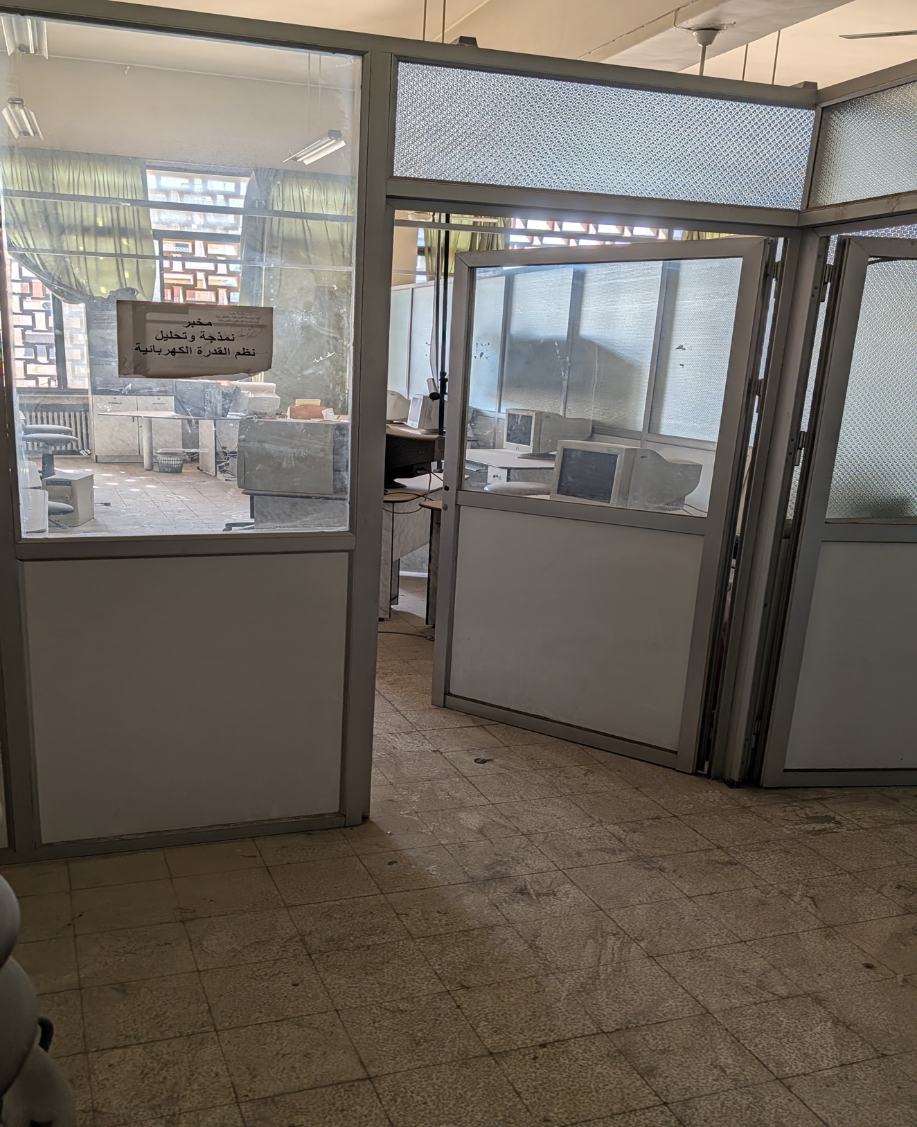
At the Faculty of Informatics Engineering at the University of Aleppo, it is not uncommon to find computers that are more than 25 years old—when functioning computers exist at all. In many laboratories, only one or two computers remain operational, forcing groups of students to crowd around a single machine during programming and laboratory sessions.
For aspiring software engineers, this creates a significant obstacle. Learning to code requires hands-on practice, experimentation, and repetition. Instead, many students spend valuable lab time waiting for their turn to use one of the few working computers.
Unfortunately, purchasing a personal laptop is beyond the financial reach of many students. Years of economic hardship have made even used computers prohibitively expensive in Syria, leaving students with few alternatives.
A Small Idea That Can Make a Big Difference
Members of the Syrian American Engineers Association (SAEA), many of whom serve as volunteer instructors in the SAEA Software Engineering Bootcamp, have witnessed firsthand both the incredible talent of Syrian students and the severe limitations they face.
Having worked closely with students and faculty, the instructors became aware of the critical shortage of functioning computers inside the university laboratories. They recognized that even a handful of modern laptops could dramatically improve the educational experience for dozens of students each semester.
Rather than waiting for a large grant or institutional funding, a group of SAEA volunteers decided to take action themselves.
Each volunteer contributed by donating one or more laptops, creating a grassroots effort to equip the laboratory with modern computing resources.
To maximize every donated dollar, the laptops were carefully sourced from eBay using SAEA’s tax-exempt purchasing account, allowing the organization to stretch its limited budget even further. High-quality refurbished business laptops readily available in the United States can often be purchased for less than half of what similar computers cost in Syria—assuming comparable equipment can even be found in the local market.
Transporting the equipment presented another challenge.
Fortunately, one of the volunteer engineers already had plans to travel to Aleppo. The donated laptops were carefully packed into his luggage and personally delivered to Syria, eliminating costly international shipping and ensuring the computers arrived safely.
From Suitcases to Students
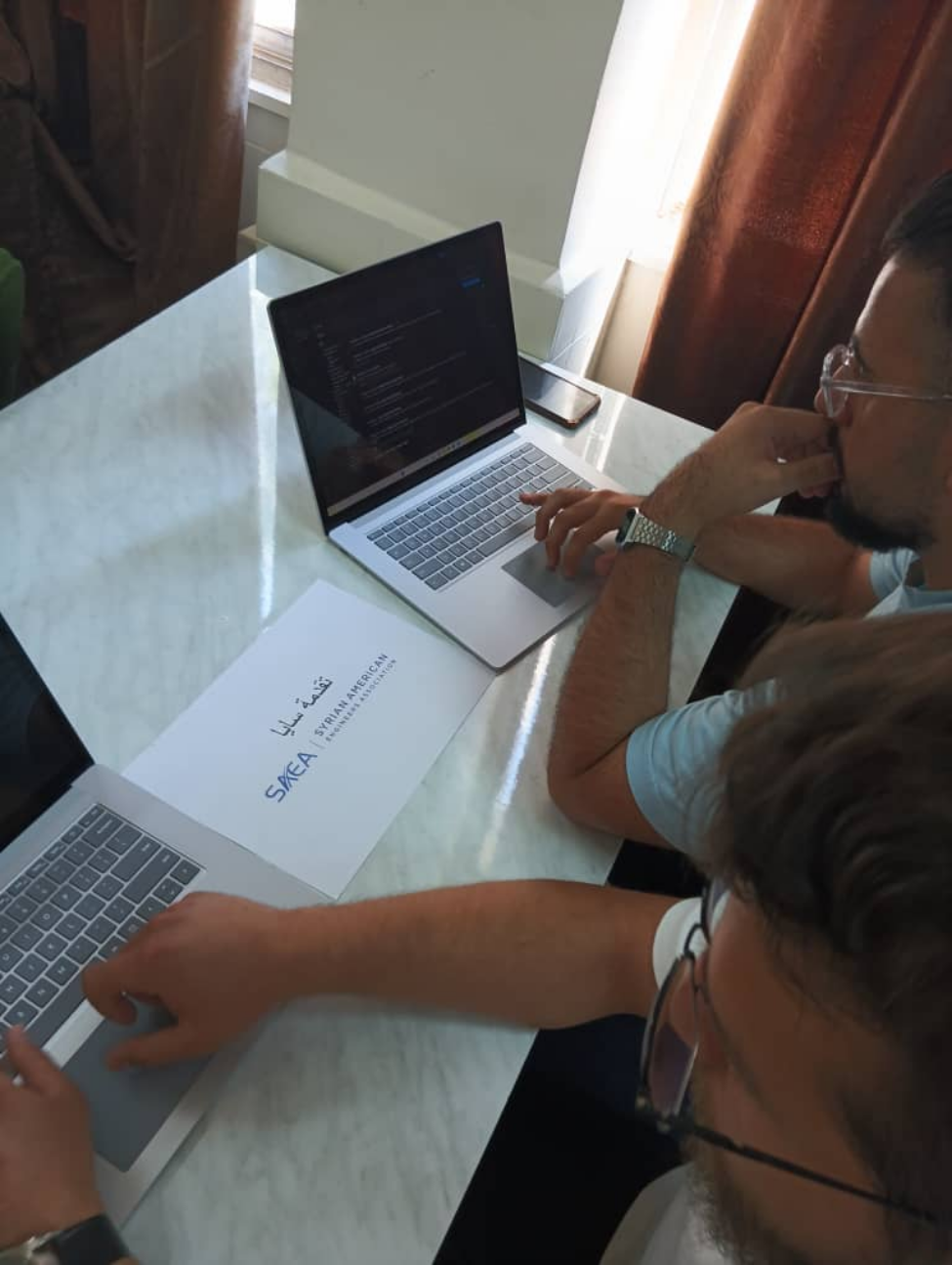
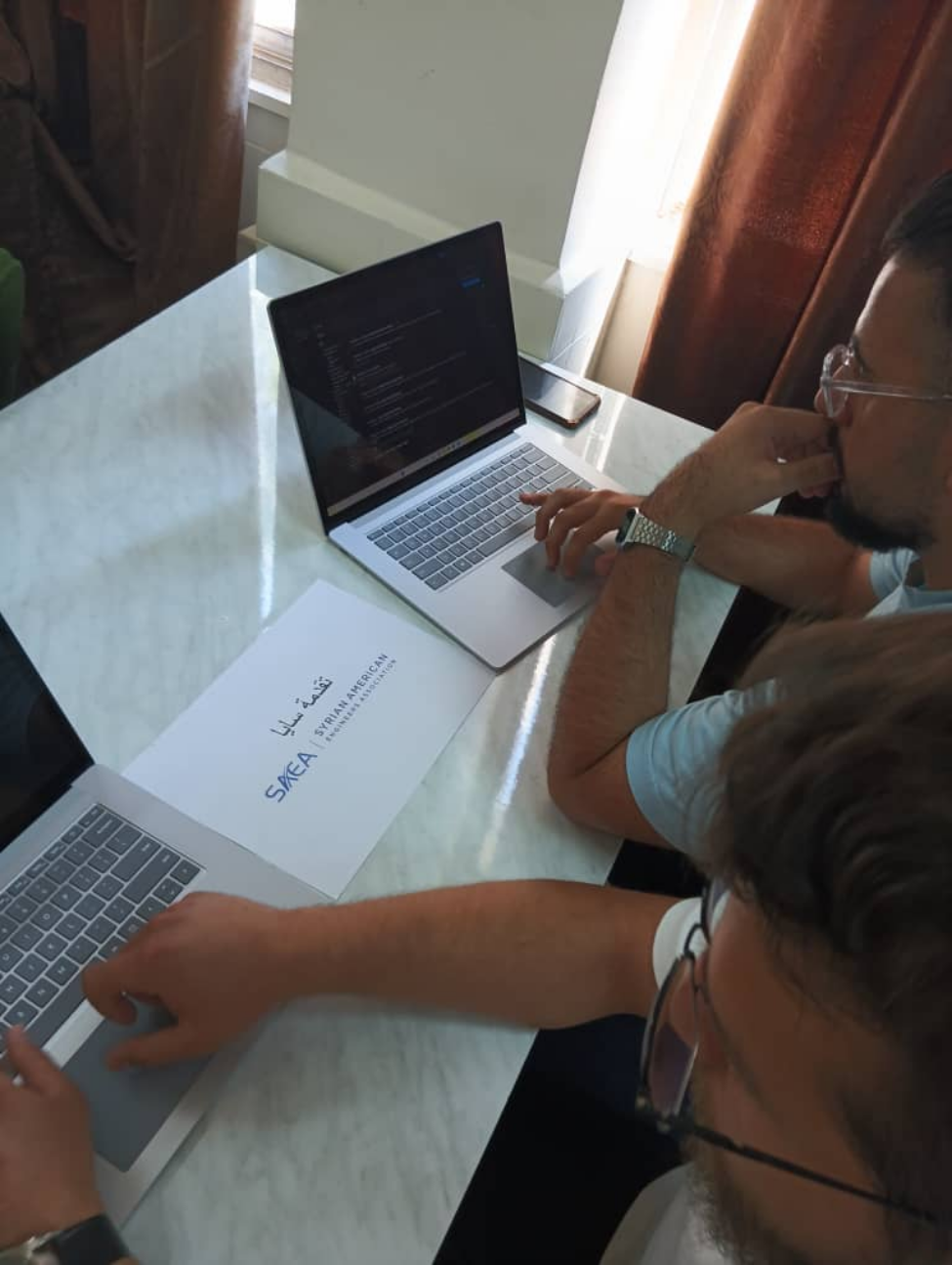
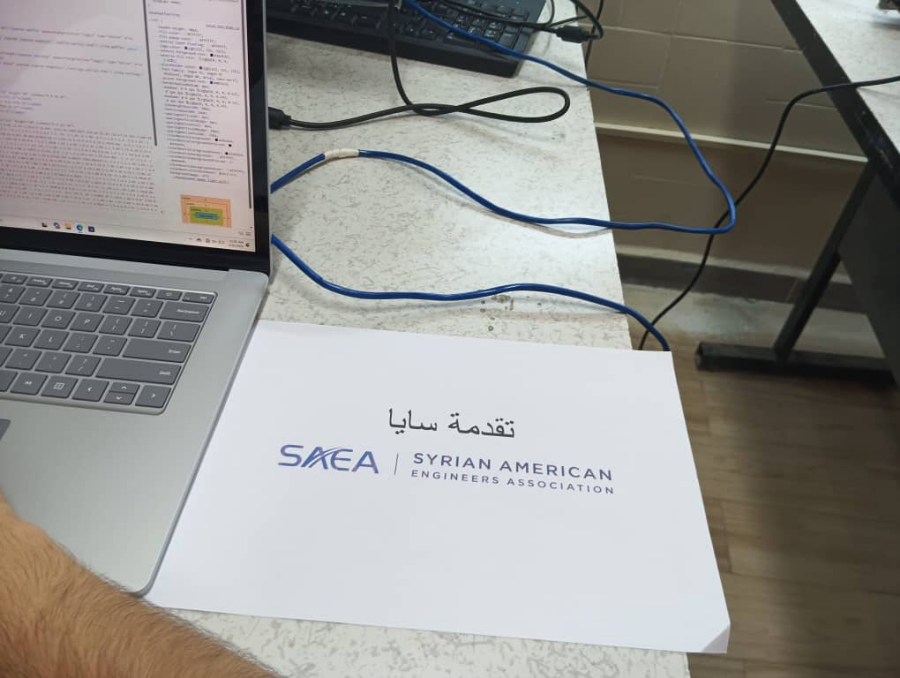
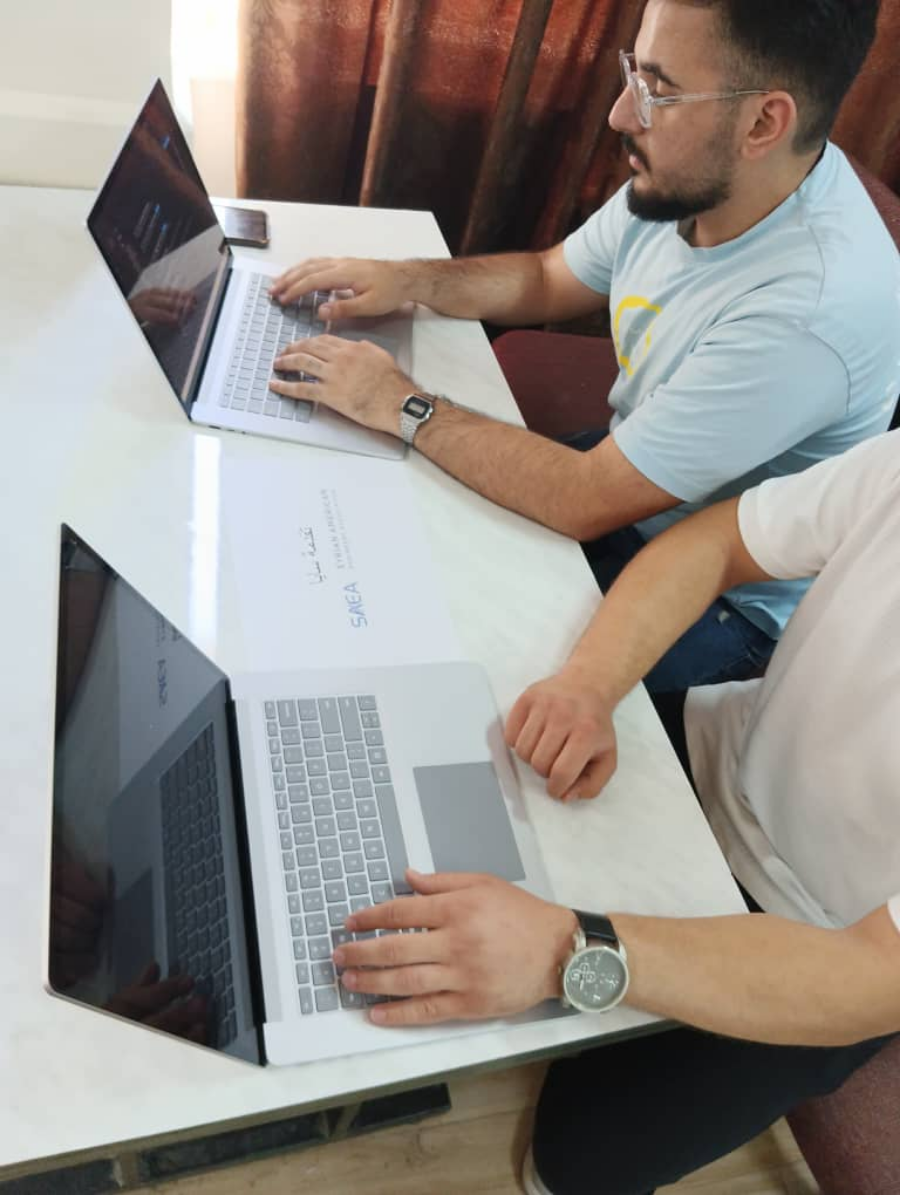
After arriving in Aleppo, the laptops were prepared, configured, and placed into service inside the computer laboratories at the Faculty of Informatics Engineering.
What had once been a lab with only a few aging, barely functional computers is now equipped with additional modern laptops that students can use for programming, software development, networking, databases, artificial intelligence coursework, and countless hours of practical learning.
While this donation does not solve every challenge facing the university, it immediately expands students’ access to technology and provides opportunities for hands-on education that simply were not available before.
Most importantly, these laptops will benefit not just one class of students, but many generations of future software engineers.
Investing in Syria’s Future
Education has always been one of Syria’s greatest strengths. The country’s future engineers, developers, and innovators possess tremendous talent and determination, but talent alone is not enough. They also need the tools to learn, build, and innovate.
This project demonstrates how a relatively small contribution can have an outsized impact. A used laptop that may no longer be needed in the United States can become an essential educational resource for dozens of engineering students in Syria.
The SAEA volunteers hope this initiative inspires others to contribute—whether through laptop donations, financial support, technical expertise, or mentorship. Every computer placed into the hands of a student is an investment in rebuilding Syria’s technical workforce and empowering the next generation of engineers.
Together, one laptop at a time, we can help create opportunities where they are needed most.
Photo Gallery

About the Syrian American Engineers Association (SAEA)
The Syrian American Engineers Association (SAEA) is a non-governmental, non-profit professional organization dedicated to advancing engineering excellence and supporting Syria’s recovery through education, professional development, humanitarian initiatives, and infrastructure restoration. Through its volunteer network and technical expertise, SAEA continues to invest in the next generation of Syrian engineers by providing mentorship, training, educational resources, and opportunities that strengthen the country’s future technical workforce.
Recent Comments