

Investing in Syria’s natural gas sector and adopting international best practices in exploration, processing, and transportation is not just an option—it’s a necessity. Strengthening this industry requires improving the skills and efficiency of national staff to fully utilize both domestically produced and imported gas, ultimately driving economic growth.
A critical step in this investment is the rehabilitation of Syria’s natural gas pipeline—a strategic project demanding meticulous planning, substantial funding, and technical cooperation with specialized entities. The gas infrastructure is a cornerstone of Syria’s energy sector and, by extension, its national economy. At this stage, securing financial support is paramount to restoring and modernizing the pipeline, ensuring it returns to full operational capacity.
Challenges Facing the Syrian Gas Pipeline
According to SAEA member Mohammad Armouti, the primary challenge lies in the inadequate supply of natural gas at the designed operational pressures. For years, the pipeline has been operating at an alarmingly low pressure—less than 8 bar compared to its original design capacity of 81 bar—and has been left without regular maintenance. Additionally, the infrastructure has suffered from vandalism, looting, and neglect, further compromising its integrity.
A major concern is the absence of essential cathodic protection systems, which prevent corrosion. As a result, the pipeline may have suffered significant deterioration. Even if gas supplies were restored, the current condition of the pipeline only allows pressurization up to 40 bar—half of its original design capacity. This means that, while it could support power plants at a minimal operational level, it wouldn’t provide the necessary surplus to handle emergencies or supply fluctuations. Extensive maintenance and rigorous testing are required to ensure its safety and efficiency.
A Roadmap for Pipeline Rehabilitation
To address these challenges, SAEA has outlined immediate steps to rehabilitate the pipeline and ensure its long-term viability:
1. Develop a Comprehensive Rehabilitation Plan
- Restore the pipeline and its associated facilities, including pressure reduction stations, valves, safety mechanisms, and cathodic protection systems.
- Address the damage caused by theft, operational neglect, and technical deficiencies.
2. Conduct a Full Technical Assessment
- Commission specialized engineering studies to evaluate the current state of the pipeline.
- Identify structural weaknesses, corrosion risks, and operational inefficiencies.
3. Establish a Phased Funding & Implementation Strategy
- Prioritize strategic sections of the pipeline for urgent repairs and upgrades.
- Secure financial resources through phased investments.
4. Engage Local & International Partners
- Initiate negotiations with global energy firms, financial institutions, and technology providers.
- Leverage international expertise to implement modern, efficient solutions.
By taking these decisive actions, Syria can restore its natural gas infrastructure, ensuring a stable energy supply and revitalizing its economy. The road to energy security starts with investment, innovation, and strategic collaboration.
Immediate Surveying, Inspection, and Condition Assessment Plan
To ensure the safe and efficient rehabilitation of the pipeline, the following inspections and assessments must be conducted without delay:
1. Visual and Corrosion Inspection
- Examine pipes and welds for any signs of corrosion, leaks, physical damage, or structural weaknesses.
2. Ultrasonic Thickness Testing
- Utilize ultrasonic testing to measure pipe wall thickness and assess corrosion levels by comparing them to the original specifications.
3. Radiographic (X-ray) Testing
- Conduct X-ray inspections to detect internal cracks, weld defects, and potential weaknesses in pipeline joints.
4. Hydrostatic Pressure Testing
- Perform high-pressure water testing in sections where gas flow is not expected in the near future, ensuring pipeline integrity under operational pressures.
5. Leak Detection Using Hydrogen or Nitrogen
- Apply hydrogen or nitrogen leak testing to detect leaks in above-ground facilities such as metering stations and sectionalized valve chambers ensuring airtight integrity.
6. Inspection of Critical Components
- Assess the condition of valves, pressure stations, expansion joints, and structural supports to confirm operational reliability.
7. Cathodic Protection System Verification
- Evaluate the effectiveness of cathodic protection systems to prevent internal and external corrosion, identifying areas requiring repairs or upgrades.
8. System Rehabilitation and Data Integrity Planning
- Develop a comprehensive rehabilitation and operational plan, ensuring seamless data transmission to control centers.
- Engage experts in fiber optic cables, telecommunications, and instrumentation to restore real-time monitoring and control capabilities.
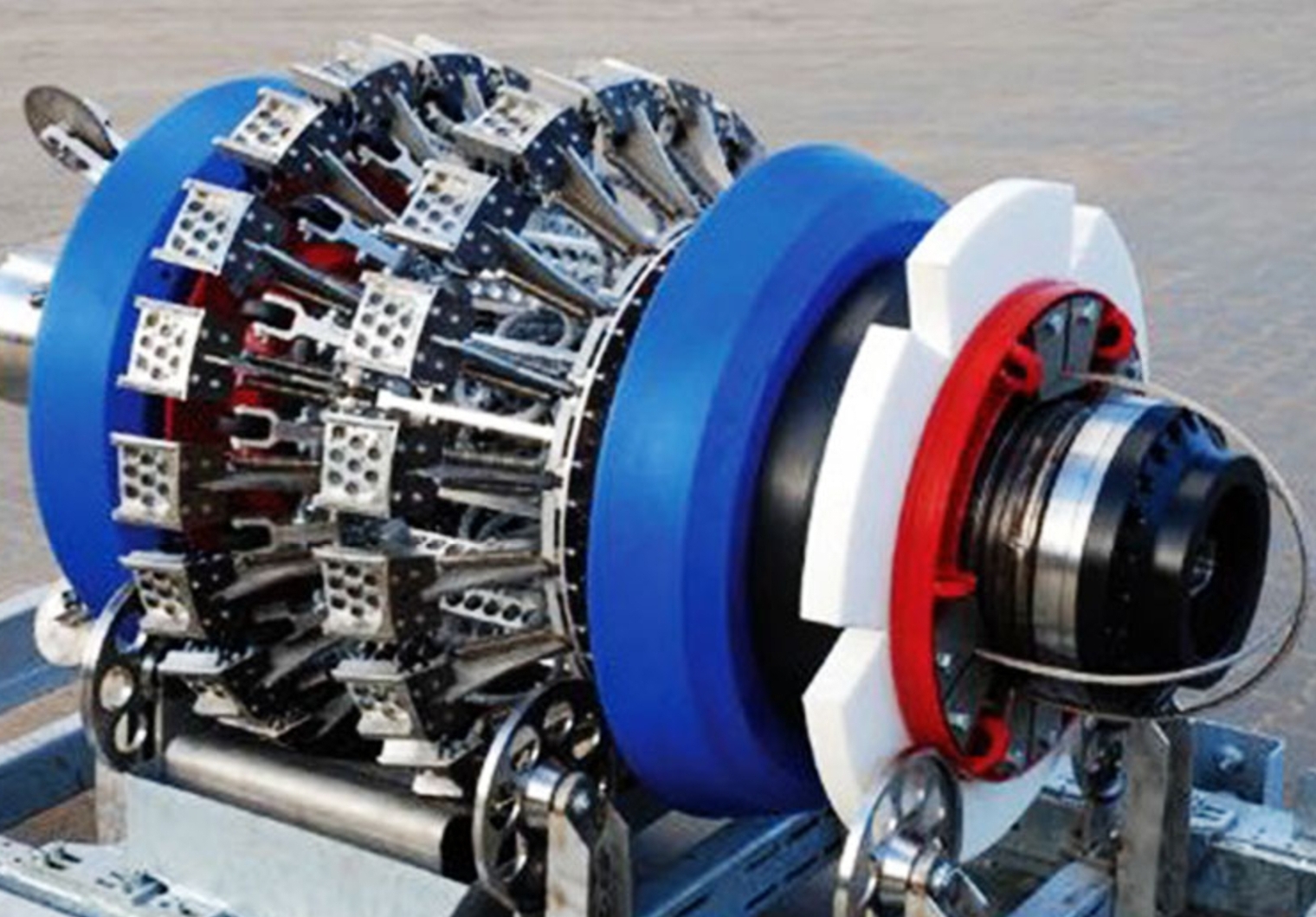
9. Intelligent Pigging Inspection Upon Gas Restoration
- Once gas flow is reinstated, conduct intelligent pigging to perform an advanced internal inspection, identifying corrosion, cracks, or changes in pipeline diameter.
- This method provides critical insights into pipeline integrity, allowing for proactive maintenance and risk mitigation.
By executing this systematic inspection and assessment plan, the pipeline's condition can be accurately determined, paving the way for efficient rehabilitation and long-term operational reliability.
This essential point shall be also added as a requirement :
10. The pipeline requires a DCVG inspection to assess the condition of its coating. However, this inspection requires a special effort to ensure a continuous power supply along the pipeline using the existing transformers. Currently, these transformers need rehabilitation before the inspection can be successfully completed.
Thank you for such a comprehensive assessment. I am not experienced in inspections but have been working in 3D CAD design in the engineering phases. I can help in verity of ways. Probably maybe in creating systems to capture and document assessment findings, generating interactive system to interact with the captured data and capturing any solutions or remedies implemented or to be implemented.