
Conference Session Recap – 2025 SAEA Summer Conference, Detroit, MI
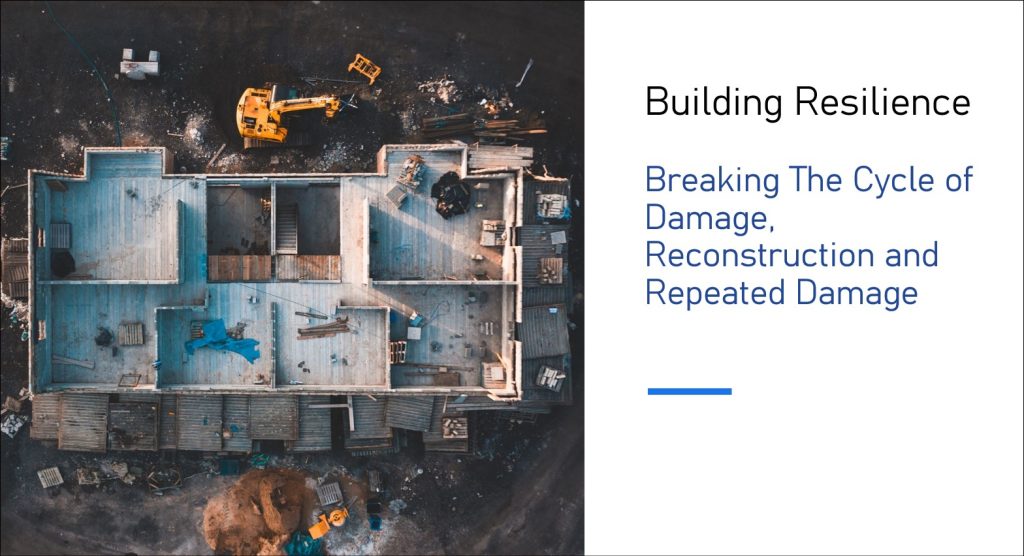
At the 2025 SAEA Summer Conference in Detroit, SAEA member Abdullah Ibraheem led an engaging session on Disaster Emergency Management, emphasizing how engineering professionals can play a decisive role in reducing vulnerability and enhancing resilience against natural hazards. The session highlighted that while natural hazards are unavoidable, natural disasters need not be inevitable. Through thoughtful design, planning, and risk-based mitigation, engineers have the tools to break the destructive cycle of damage, reconstruction, and repeated loss.
Defining Resilience in Engineering Practice
Resilience was framed not as an abstract ideal, but as a measurable capacity: the ability of individuals, communities, businesses, institutions, and governments to prepare for, withstand, and rapidly recover from disruptive hazard events. For engineers, this translates into concrete priorities:
- Minimizing disaster impacts through resilient infrastructure and systems.
- Maintaining critical functions during emergencies by ensuring redundancy and continuity.
- Enabling rapid recovery of communities and economic activity after disruption.
- Protecting lives and property by embedding safety at the core of design standards.
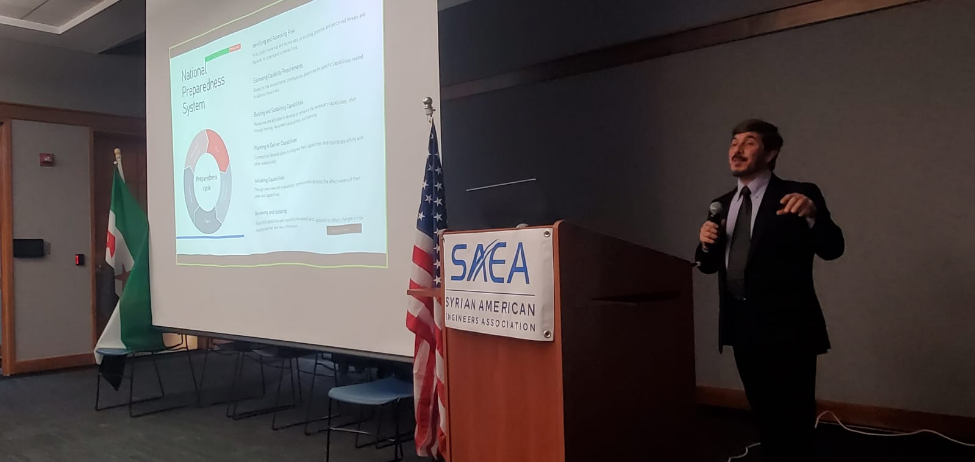
The National Preparedness System
Ibraheem outlined the U.S. National Preparedness System as a framework that engineers can adapt globally to enhance readiness. The system follows a structured process:
- Identifying and Assessing Risk – Analyzing historical and emerging hazards.
- Estimating Capability Requirements – Determining what communities need to withstand those risks.
- Building and Sustaining Capabilities – Developing systems, training, and resources.
- Planning to Deliver Capabilities – Integrating stakeholders across sectors.
- Validating Capabilities – Testing plans through exercises and simulations.
- Reviewing and Updating – Continuously refining plans based on lessons learned.
This cycle ensures that preparedness evolves with changing risk profiles and technological advances.
Five Mission Areas of Disaster Management
The session broke down disaster management into five mission areas recognized internationally:
- Prevention – Stopping hazards from becoming disasters where possible.
- Protection – Safeguarding lives and assets against greatest threats.
- Response – Addressing immediate impacts to save lives and stabilize conditions.
- Recovery – Rebuilding infrastructure and restoring essential services.
- Mitigation – Reducing future risks through long-term planning and engineering solutions.
Together, these mission areas define the scope of professional responsibility for engineers engaged in resilience-building.
Community Lifelines and Hazard Mitigation
A central theme was the importance of community lifelines—the critical systems (such as energy, water, communications, and transportation) that sustain society. Their continuity determines how well a community weathers crises. Engineers must therefore design with redundancy, robust emergency protocols, and rapid restoration strategies in mind.
Mitigation was presented as a cornerstone of effective disaster management: any sustained action that reduces or eliminates long-term risk to people and property. Here, risk analysis is essential—identifying hazards, assessing exposure, and prioritizing interventions. Data-driven methods strengthen planning and ensure resources are directed where they will have the greatest impact.
Engineering Solutions Across Hazard Types
The presentation also highlighted engineering interventions across different natural hazards:
- Tornadoes – Safe rooms, advanced warning systems, and reinforced structures.
- Floods – Levees, floodplain zoning, improved drainage, and elevation measures.
- Earthquakes – Seismic-resistant construction, retrofitting, and strict building codes.
- Wildfires – Fire-resistant materials, defensible space design, fuel reduction, and code enforcement.
Conclusion and Call to Action
This session underscored that the engineering profession sits at the center of resilience. By embedding risk analysis, robust planning, and mitigation into practice, engineers can help communities withstand the growing challenges of natural hazards.
SAEA continues to advance resilience engineering initiatives. Members interested in the complete PowerPoint or contributing to future sessions or joining ongoing committee work are encouraged to engage with SAEA and help shape technically sound, impactful strategies for disaster preparedness and recovery.
Recent Comments