

Conference Session Recap – 2025 SAEA Summer Conference, Detroit, MI
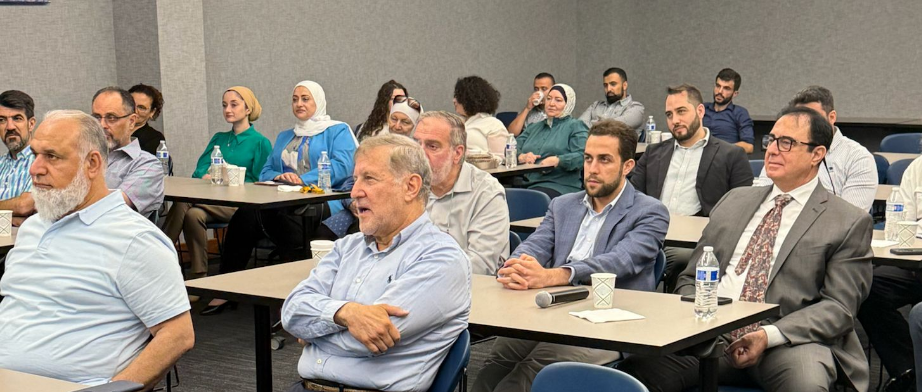
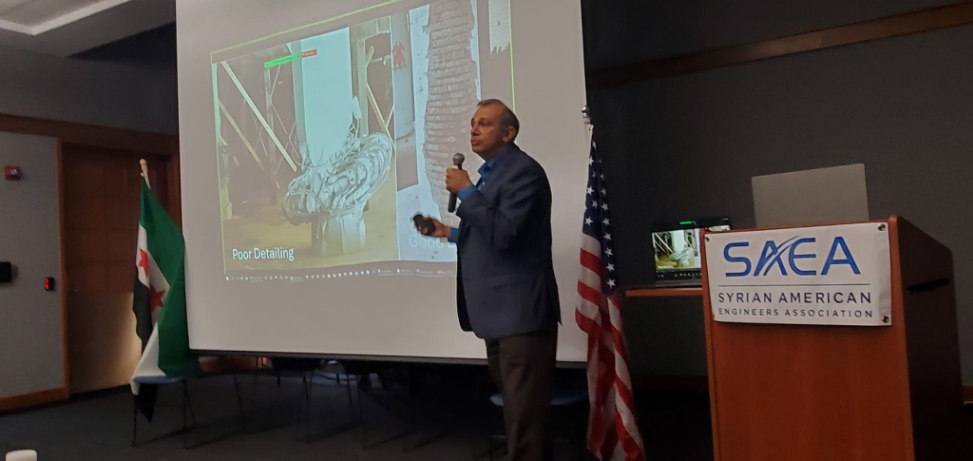
During the 2025 SAEA Summer Conference in Detroit, SAEA contributor and University of Michigan professor Dr. Sherif El-Tawil delivered a powerful session titled “Disaster Engineering: Achieving Resilience in the Face of Extreme Events.” His presentation challenged the structural engineering community to confront an uncomfortable truth: many of the world’s buildings remain houses of cards, vulnerable to catastrophic collapse when subjected to extreme events such as earthquakes, blasts, or progressive structural failures.
Understanding Disproportionate and Progressive Collapse
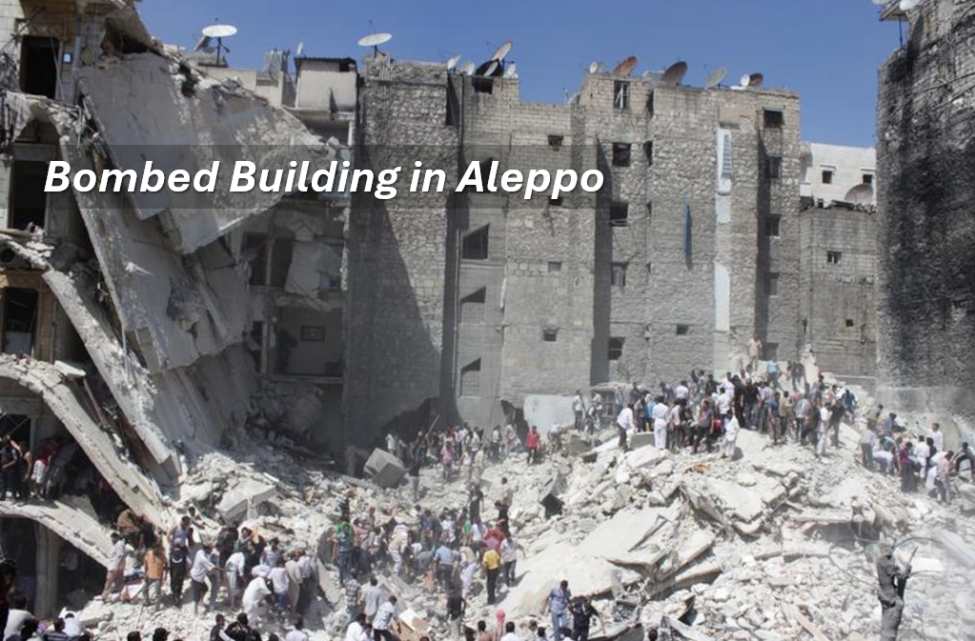
Dr. El-Tawil opened with striking imagery—from the Murrah Federal Building bombing to the 2023 Kahramanmaraş earthquake—illustrating how a single point of failure can trigger disproportionate or progressive collapse. In such scenarios, the failure of one structural component cascades into the loss of an entire building or system.
The consequences are often devastating, measured in both lives lost and communities destabilized. Yet, as Dr. El-Tawil emphasized, these outcomes are not purely natural phenomena—they are symptoms of systemic failures in design practice, construction oversight, and regulatory enforcement.
Why Do Some Buildings Collapse While Others Survive?
Drawing from real-world case studies, the session examined why, under identical conditions, one structure stands while another crumbles. The reasons are disturbingly consistent across geographies:
- Poor or absent structural detailing
- Inadequate or outdated design codes
- Uneven construction quality and substandard materials
- Weak structural connections and irregular building geometry
- Lack of retrofitting for aging structures
- Corruption, lax inspection regimes, or amnesty laws that legalize violations
According to Dr. El-Tawil, these are not isolated technical flaws, but rather indicators of a broader failure of engineering governance. Sustainable resilience requires that engineers, policymakers, and inspectors operate within an integrated framework of accountability—one that prioritizes public safety above expediency.
Structural Design Philosophy for Extreme Events
The session reinforced that the goal of structural design is not to eliminate all damage, but to control failure in predictable, life-protecting ways. Modern codes, for example, define acceptable performance thresholds across hazard intensities:
- Weak event: minimal or no damage
- Severe event: repairable damage, but life safety maintained
- Devastating event: potential structural loss, but collapse prevented
This philosophy underpins both seismic and blast design codes, ensuring that buildings maintain robustness and alternate load paths even under extraordinary stresses. Engineers must therefore design systems that can absorb and redistribute forces without succumbing to brittle, cascading failure.
Seismic and Blast Resilience
In seismic design, ductility, redundancy, and regularity are paramount. Ductile detailing allows structures to deform without collapsing; redundancy creates multiple pathways for seismic forces; and regular geometry minimizes torsional irregularities. Dr. El-Tawil underscored the need to enforce existing codes and retrofit vulnerable stock—steps that remain cost-effective compared to post-disaster recovery.
For blast resilience, a similar philosophy applies: threat-independent design that ensures buildings remain standing even after localized damage. This includes strengthening key columns, adopting blast-resistant configurations, and using energy-dissipative materials. Proper detailing and adherence to established standards are, once again, the first lines of defense.
The Broader View: Disaster Engineering and Public Safety
While technical in focus, Dr. El-Tawil’s message extended beyond engineering calculations. Disaster resilience, he noted, is a societal mandate, not a niche specialization. Structural integrity is inseparable from governance, ethics, and education. When codes exist but are ignored—or when economic and political pressures undermine enforcement—the results are predictable tragedies that Syria has had its fair share of in decades past.
The lecture served as a reminder for Syrian rebuilding that disaster engineering is not just about designing for strength, but also about designing for justice—ensuring that every community in Syria, regardless of income or geography, benefits from safe and resilient structures.
Conclusion and Call to Action
Dr. El-Tawil’s presentation exemplified the depth of SAEA’s technical and commitment to the importance of quality and ethical approach to Syria’s rebuilding and reconstruction strategies. SAEA members call for renewed engineering responsibility in Syrian recovery efforts—a topic and core value that resonates deeply with SAEA members and conference attendees alike.
SAEA continues to promote resilience through knowledge exchange and professional leadership. Members interested in contributing to future sessions or in advancing resilience and structural safety initiatives are encouraged to engage through SAEA committees and upcoming technical workshops.
Recent Comments