
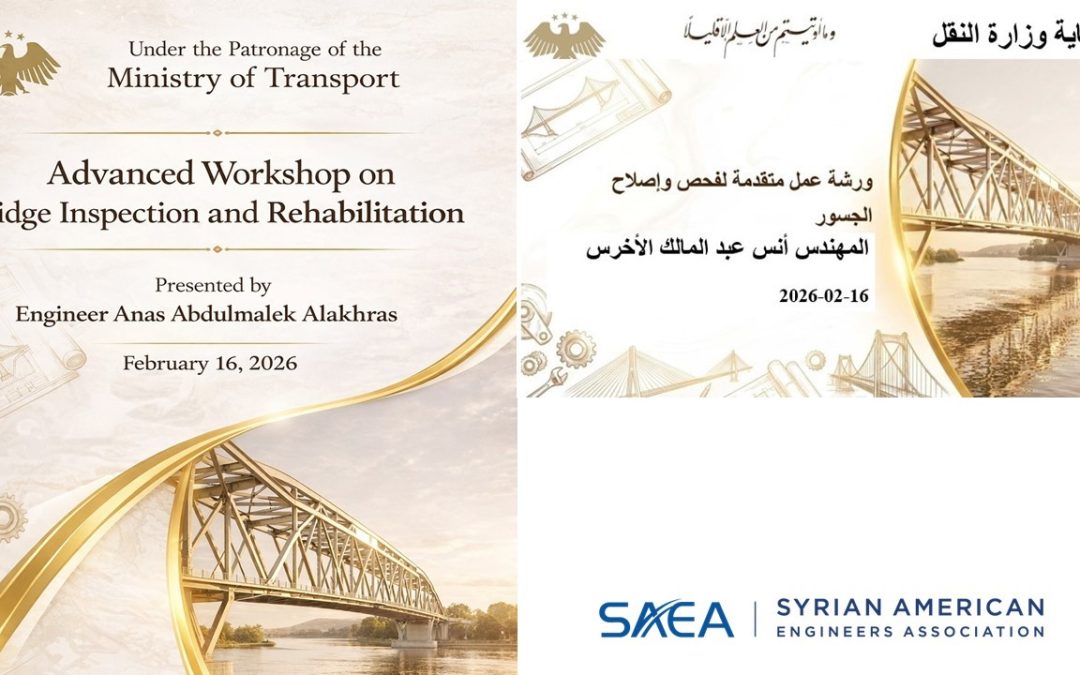
Under the Patronage of the Syrian Ministry of Transportation, an advanced Workshop on Bridge Inspection and Rehabilitation was presented in Syria by SAEA Urban Planning Committee Co-Chair Eng. Anass Alakhrass.

This specialized training workshop was conducted for the engineers of the Ministry of Transportation, providing attendees with a complete guide on bridge evaluation and damage assessment methodologies, ranging from routine inspections to handling emergencies such as fires and blasts. The Key Topics Covered:
- Objectives of Inspection & Evaluation: The primary goal is to protect public safety, ensure compliance with National Bridge Inspection Standards (NBIS), and extend the service life of bridges through the early detection of structural defects that could lead to catastrophic failures.
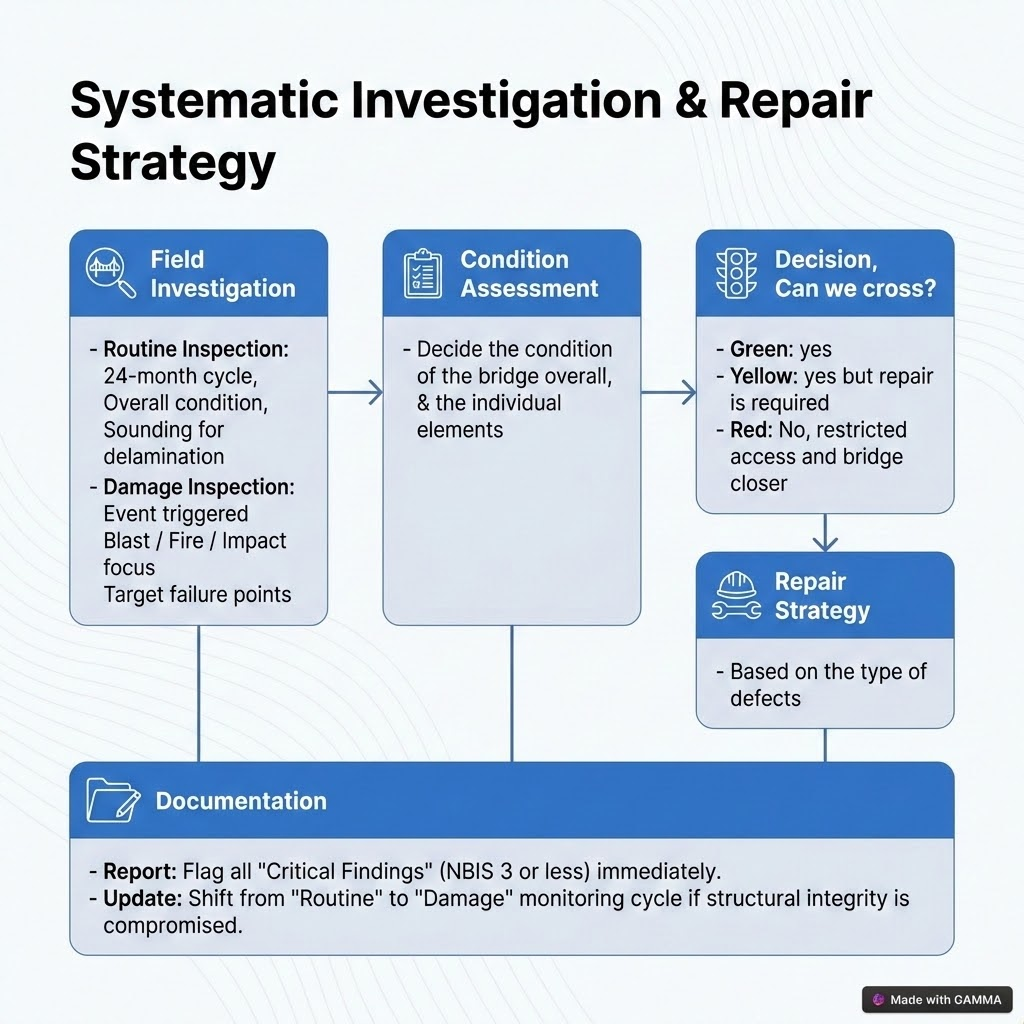
- Systematic Evaluation Steps: The process begins with reviewing As-built drawings and prior reports, followed by evaluating site conditions and securing logistics (such as traffic control, lighting, and access). It culminates in making a final safety decision (Green for safe passage, Yellow for access with required repairs, and Red for immediate closure).
- Safety & Inspection Procedures: The lecture emphasizes the necessity of Personal Protective Equipment (PPE) and pre-entry hazard assessments. It also highlights the use of specialized access equipment for hard-to-reach areas, such as man-lifts and under-bridge inspection vehicles (Snoopers).
- Impact of Fires & Disasters: The presentation details the progressive degradation of materials under high heat. Concrete loses about 40% to 50% of its compressive strength when temperatures reach 500°C. Standard steel rebar loses approximately 50% of its yield strength at around 593°C, while prestressed cables are highly heat-sensitive and lose their strength at just 400°C.
- Non-Destructive & Destructive Testing (NDT & DT): NDT methods, utilizing tools like the Schmidt Hammer and Ground Penetrating Radar (GPR), offer cost-effective and rapid scanning without causing structural harm. In contrast, Destructive Testing (such as Core sampling) is used to obtain highly accurate design values and confirm findings, despite causing localized damage.
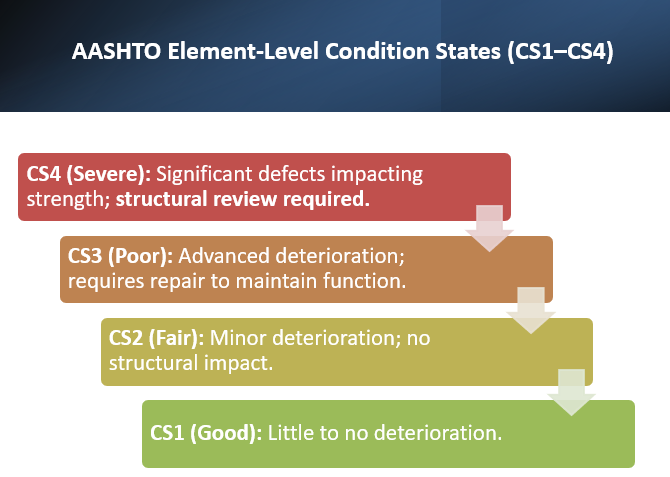
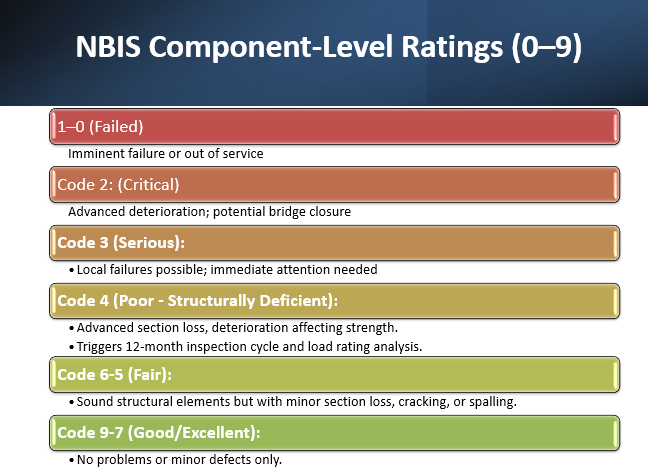
- Global Evaluation Codes: The lecture compares the AASHTO system—which evaluates individual bridge elements (like girders and bearings) across four condition states (CS1 to CS4)—with the NBIS system, which evaluates major bridge components on a general numerical scale from 0 to 9 to report national safety levels and allocate funding.
- Case Study: SAEA Darayya Damage Assessment: The lecture highlighted a major initiative by the Syrian American Engineers Association (SAEA) where a trained team of Syrian engineers conducted extensive damage assessments for buildings and infrastructure. This real-world application demonstrated the ultimate goal of the investigation roadmap: classifying structures for safety using a Green/Yellow/Red tagging system to effectively prioritize repairs, interventions, and closures.
Recent Comments