
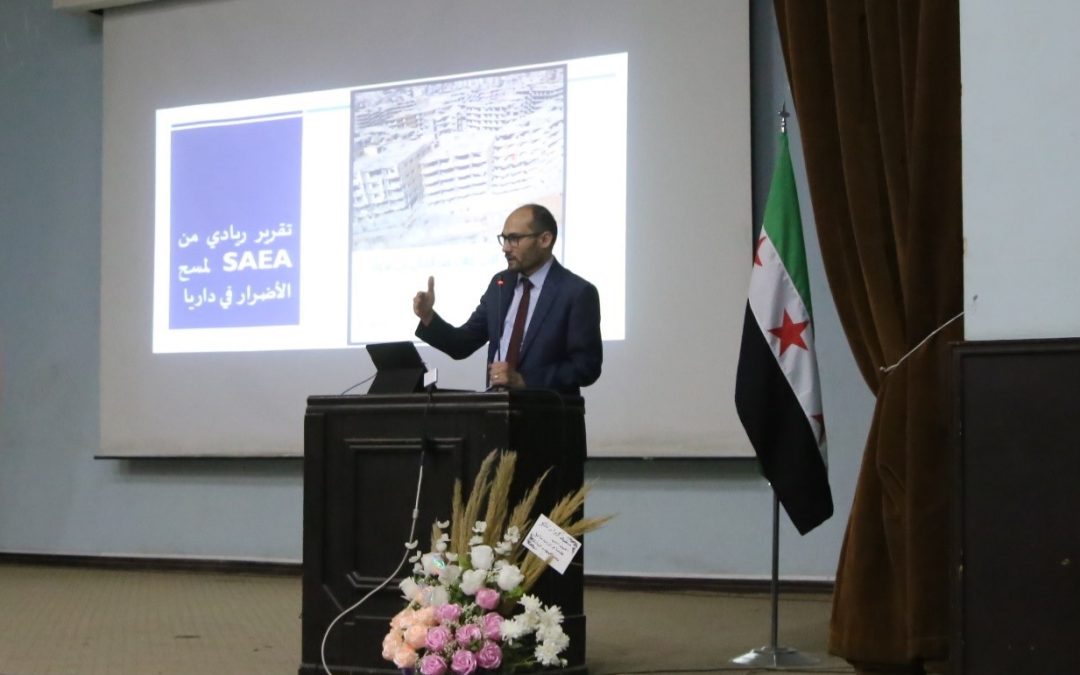
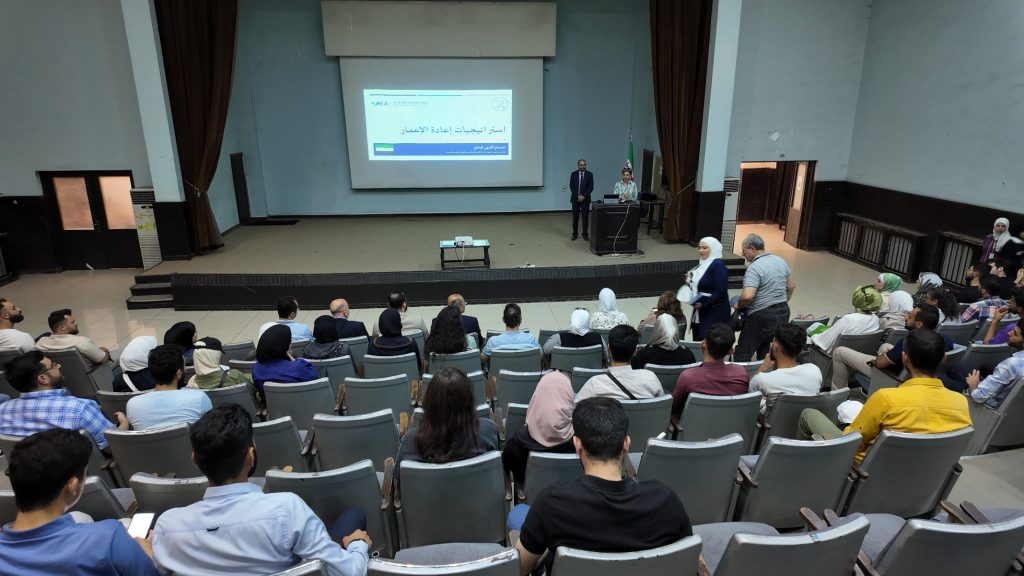
Under the patronage of Dr. Mohammad Osama Radoun, President of the University of Aleppo, and in partnership with the Syrian American Engineers Association (SAEA) presented a scientific lecture titled:
"Reconstruction and Sustainable Recovery Strategies in the Post-War and Disaster Phase"
"استراتيجيات إعادة الإعمار والتعافي المستدام في مرحلة ما بعد الحروب والكوارث"
Held at the College of Architectural Engineering, University of Aleppo, SAEA member architectural engineer and reconstruction expert Hossam Alddeen Fael delivered the presentation relying on work experience in recovery, resilience, and sustainable urban development in disaster-affected zones.
A Vision Beyond Bricks and Mortar
In a city still bearing the physical and emotional scars of conflict, the SAEA lecture was far more than academic. Fael invited attendees to rethink reconstruction as a transformative national project—not simply a return to what was lost, but an opportunity to build forward better & smarter.
The presentation revolved around a set of compelling principles:
- Community participation and local decision-making
- Social justice and property rights
- Environmental sustainability
- Institutional resilience and adaptability
Reflecting SAEA’s mission with conviction, Fael emphasized the importance of contextual understanding, inclusive planning, and structured damage assessment—all essential for guiding Syria toward recovery that is both just and future-ready.
From Theory to Action: A Strategic Framework
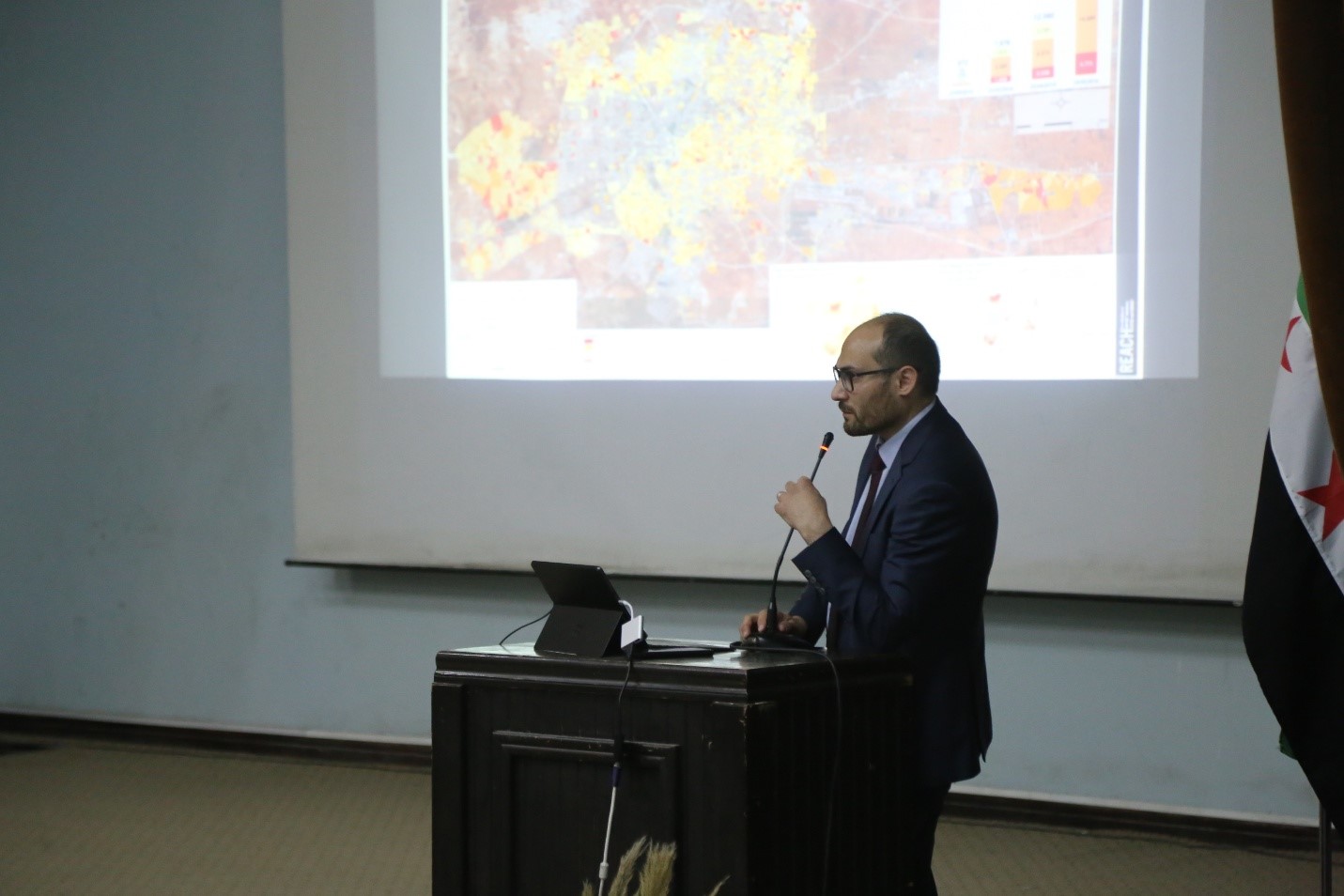
Fael’s lecture journeyed through six interconnected themes:
- Guidelines for Sustainable and Equitable Reconstruction
- Reading the Local Context and Assessing the Reality
- National Strategy Development for Damage Mapping
- Classification of Affected Zones and Intervention Priorities
- Comparative Reconstruction Strategies – including in-situ upgrading, resettlement, and public-private partnerships
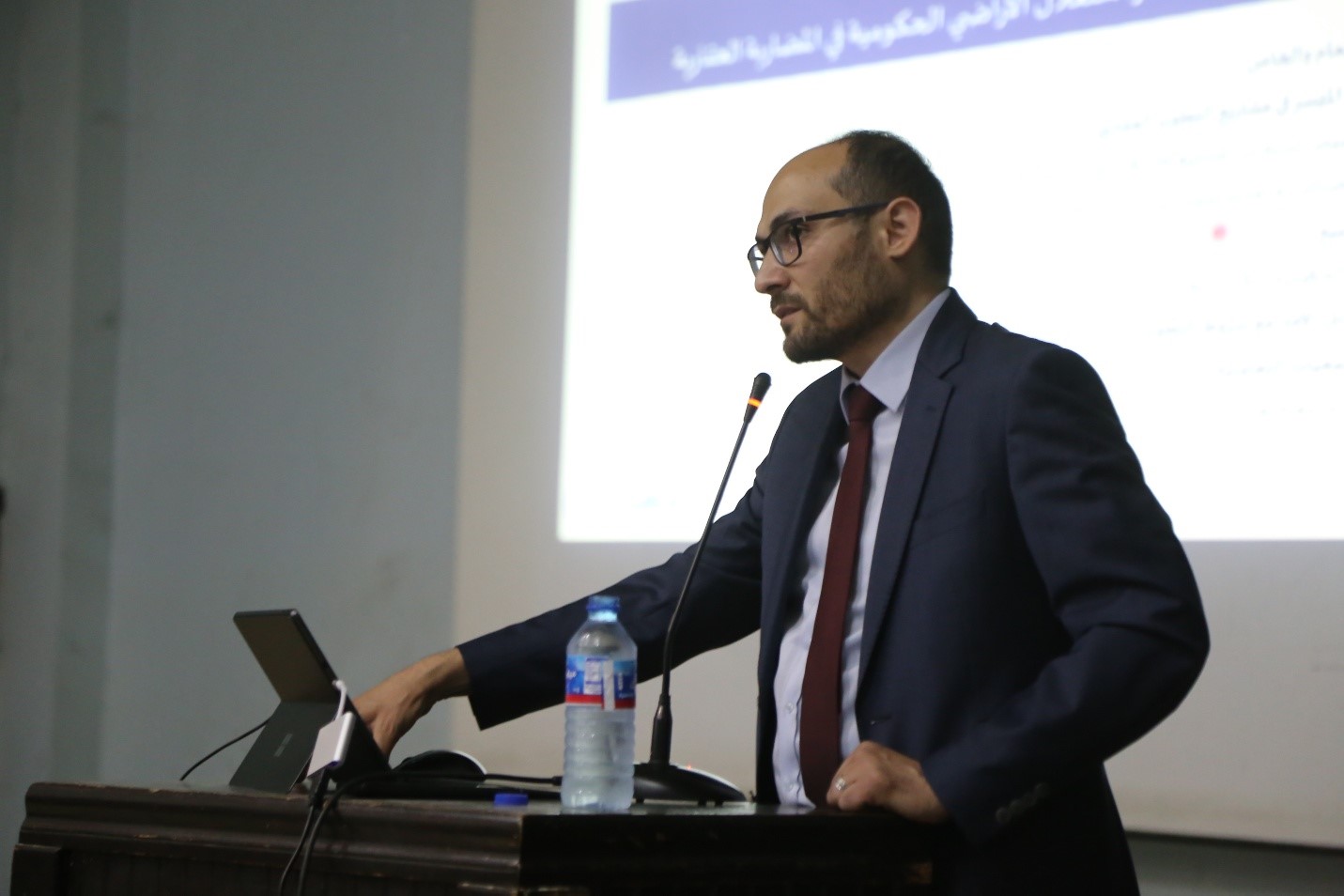
- Risks of Land Misuse and Urban Speculation
A particular highlight was the exploration of international case studies, which sparked critical reflections on their applicability to the Syrian urban reality—prompting conversations on how to localize best practices without importing flawed models.
A Dynamic Exchange of Ideas
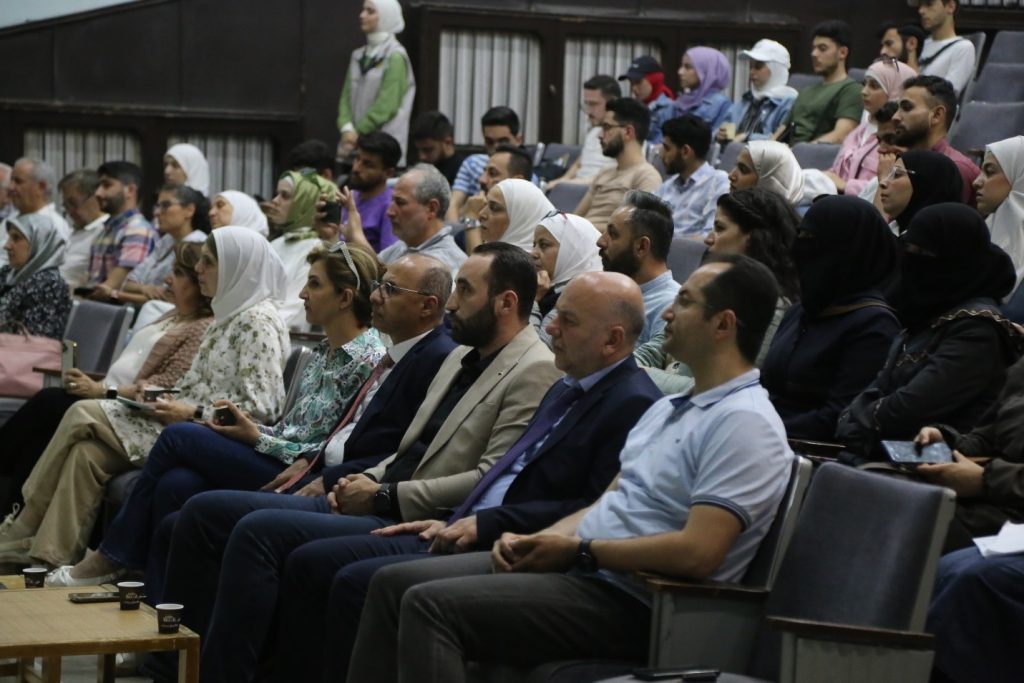
The event drew 53 registered participants, with the majority being undergraduate students, joined by academic faculty and representatives from local government agencies. This mix of backgrounds created the perfect setting for an engaging post-lecture discussion.
Far from a one-way delivery, the session turned into a multi-generational exchange. Participants shared insights on community-led planning, questioned existing urban recovery frameworks, and offered bold ideas—including launching a pilot for rebuilding one square kilometer of a destroyed neighborhood, based entirely on local decision-making.
What Participants Had to Say
The post-event evaluation, completed by 31 attendees, revealed strong enthusiasm and a clear appetite for additional educational seminars by SAEA. Nearly all participants rated the content highly, commending Fael’s ability to deliver complex material in an accessible and engaging way.
Feedback highlights included:
- Requests for longer, more detailed follow-up sessions
- Appreciation for the lecture’s depth and relevance
- Calls to further contextualize examples to Syrian realities
- Suggestions for expanding the discussion on sustainability dimensions
Some feedback voiced a healthy critique, noting that while the lecture was rich in concepts, a clearer structure and deeper focus on sustainability frameworks would strengthen its practical relevance.
A Shared Commitment to the Future
For both the Faculty of Architectural Engineering and SAEA, this lecture reflected a shared commitment: to cultivate knowledge, critical thinking, and vision among Syria’s future architects, planners, and decision-makers. In a country where rebuilding is both a necessity and a challenge, these conversations are essential to enforce master planning for smarter cities for the future.
SAEA is proud to have partnered in making this event possible, and even prouder to stand with the rising generation of Syrian engineering professionals who are not only imagining recovery but preparing to lead it and ensure its success.
Recent Comments