
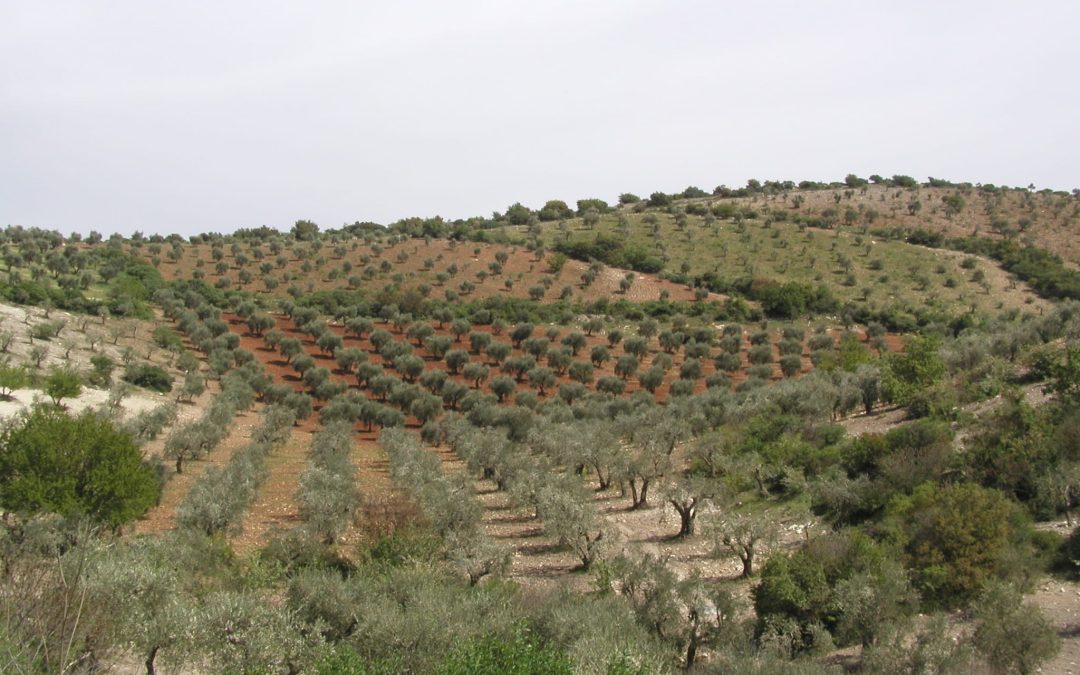
A recent study by SAEA member Dr. Zouheir Massri, published on December 19, 2025, in Soil Systems, investigates land degradation in hilly olive-growing landscapes of northwestern Syria, focusing on soil erosion dynamics, management-induced disturbance, and their long-term implications for agroecosystem sustainability. The study documents how prolonged mechanized “clean tillage” in steep olive orchards of Afrin has intensified soil redistribution, runoff connectivity, and erosion risk.
Based on a Farmer- Scientist Participatory Technology Development (PTD) framework, the research evaluates soil surface disturbance, erosion pathways, and key management drivers under Mediterranean climatic conditions. Rather than prescribing a single solution, it assesses how alternative practices influence soil stability and hydrologic response.
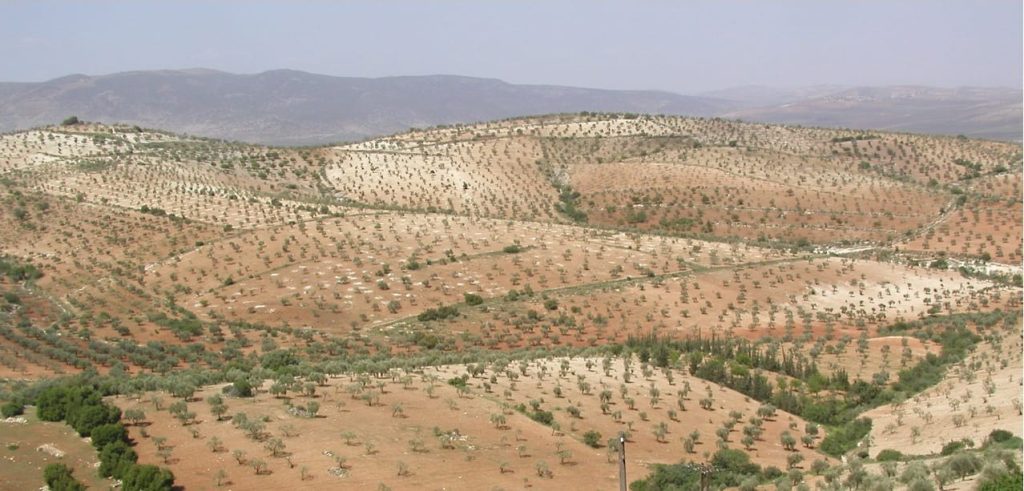
Results highlight the importance of vegetation cover and reduced soil disturbance in limiting erosion and maintaining soil organic matter. Areas incorporating natural vegetation strips showed higher organic matter levels and improved surface protection compared with intensively tilled inter-rows. The study also demonstrates that tillage direction significantly affects soil displacement, with contour-oriented operations reducing downslope soil movement relative to uphill–downhill plowing.
By comparing mechanized tillage with historical low-disturbance practices, the research illustrates how poorly adapted mechanization on steep slopes accelerates land degradation. Although centered on olive orchards in northwestern Syria, the findings are broadly applicable to Mediterranean steep-land farming systems, where vegetation removal and inappropriate mechanization continue to threaten soil resources.
Please click the link to read the article: https://doi.org/10.3390/soilsystems10010001
Source: Masri, Z., et al. (2025). "Restoring Soil and Ecosystem Functions in Hilly Olive Orchards in Northwestern Syria." Soil Systems, 10(1).
Recent Comments